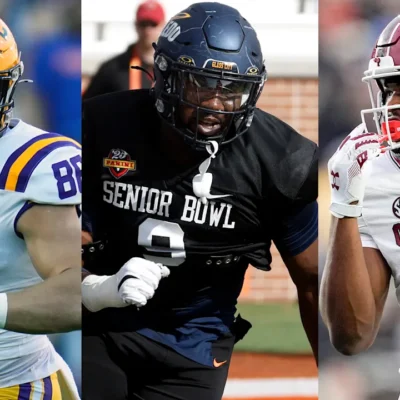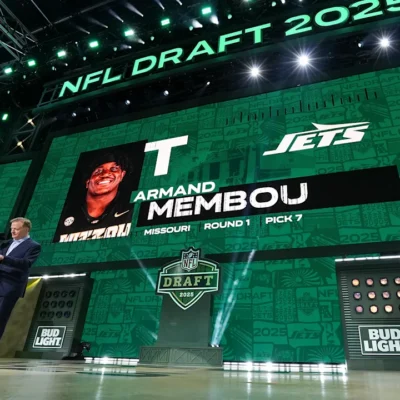



Entering the opening night of the 2026 NFL Draft, the New York Jets were one of only six franchises holding multiple first-round selections. By the end of Thursday evening, they had not only used both of those picks, but also traded back into the first round to secure a third premier prospect. The Jets selected Texas Tech edge rusher David Bailey with the No. 2 overall pick, Oregon tight end Kenyon Sadiq at No. 16, and Indiana wide receiver Omar Cooper Jr. at No. 30.
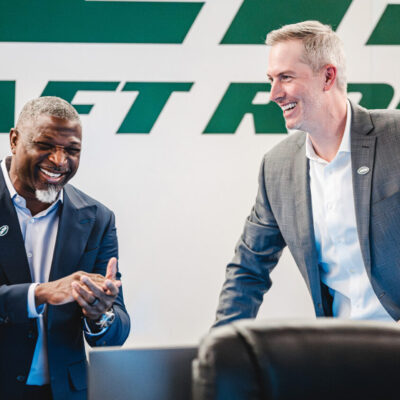
“When you have targets, you identify guys you like, you love – you go get them,” head coach Aaron Glenn said. “And that’s exactly what we did today.”
“And any time you can bring guys with a winning background on your team, that only helps the morale of your team. So, there’s a lot of things that goes into that, but to get three first-round picks and the caliber guys that we got, the personality, the mentality, the football character, all those things are huge, bringing those guys on our team.”
For months leading up to the draft, speculation centered on whether the Jets would use the second overall selection on Bailey or Ohio State edge linebacker Arvell Reese. While the organization held both players in high regard, Bailey’s proven production as a pass rusher ultimately made him the preferred choice.
The Texas Tech standout, measuring 6-foot-5 and 251 pounds, finished the 2025 season tied for the national lead with 14.5 sacks and ranked second in the FBS with 19 tackles for loss. Reese eventually came off the board three picks later when the New York Giants selected him at No. 5 overall.
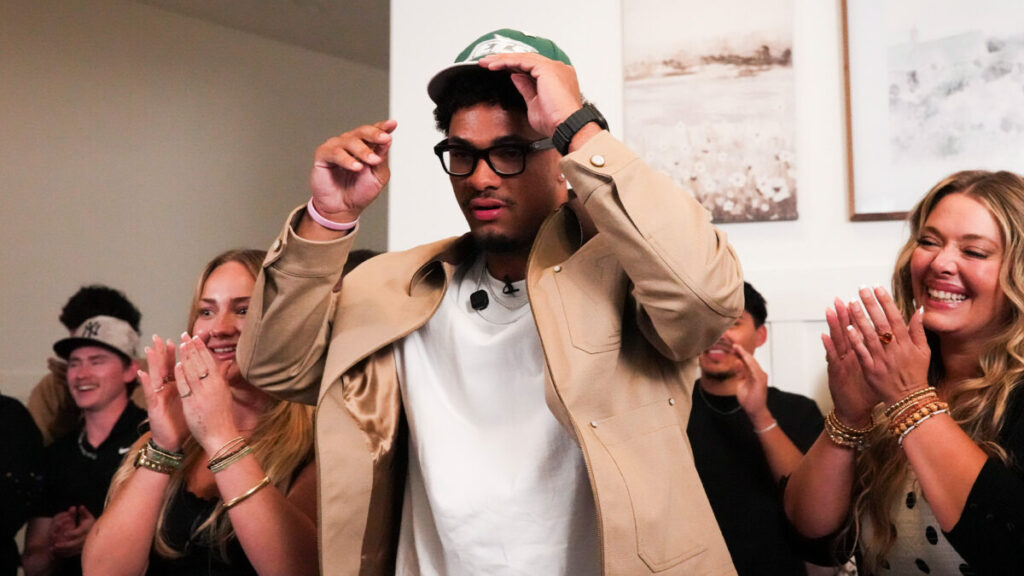
“Both of those guys… are really good players,” Glenn said. “Listen, Arvell’s going to have a really good career in this league, but when you just continue to evaluate those guys, we just felt like Bailey fit us better when it comes to he’s a 6’4″, 255 pound man with 34 inch arms that has a ton of production in college. Listen, we looked at all those things, and he fits us.”
Later in the first round, the Jets added another dynamic weapon by selecting Sadiq with the 16th overall pick. One of the most athletic prospects in the entire draft class, Sadiq established himself as one of college football’s most dangerous tight ends during his time at Oregon.
The 6-foot-3, 241-pound playmaker set a school record for tight ends with 51 receptions in 2025 and led all FBS tight ends with eight touchdown catches. His athletic profile drew significant attention during the pre-draft process, highlighted by a blazing 4.39-second 40-yard dash and an impressive 43.5-inch vertical leap at the NFL Combine.
“Sadiq was a player that, obviously we studied, spent a lot of time on and valued as an offensive weapon,” said general manager Darren Mougey. “And when he was there it was really a no-brainer for us, just to add another weapon to the offense. And Frank’s (Reich) got a great vision for the player and how we can use him in multiple ways and get in 12-personnel and do different things and just use him as another weapon and make it tough on the defense.”
Despite several highly regarded wide receivers remaining available, including USC’s Makai Lemon and Texas A&M’s KC Concepcion, the Jets prioritized Sadiq’s unique skill set and versatility. He joins a tight end group that already features Mason Taylor and Jeremy Ruckert, giving offensive coordinator Frank Reich a variety of personnel options moving forward.
“We’re going to be able to dictate as far as the defense is concerned on what are you going to play,” Glenn said. “Are you going to be in base, are you going to be in nickel? And he brings that value to us. There are so many positions that he can play for us that’s going to make us be able to open up the offense and Frank (Reich) has a really, really good vision for this player.”
The Jets’ aggressive approach continued late in the evening when Mougey orchestrated a trade with the San Francisco 49ers. New York sent the 33rd overall pick and a compensatory fifth-round selection (No. 179) to move back into the first round and acquire the No. 30 pick.
With that selection, the Jets drafted Indiana receiver Omar Cooper Jr., a player they had been linked with throughout much of the pre-draft process.
Cooper, who stands 6-foot and weighs 199 pounds, emerged as Indiana’s top receiving threat during the Hoosiers’ National Championship season. He finished the year with 69 receptions for 937 yards and 13 touchdowns while demonstrating the ability to play both outside and in the slot.
“Omar Cooper (Jr.) was a guy that we had good grades on and when we saw him there towards the end, an opportunity to give up a comp fifth, pick 179, to get back up and get the fifth-year option and just make sure we got our guy – we felt really good about,” Mougey said. “Again, to add another weapon, a guy that’s got RACs, strong hands, can insert block, has a little versatility to play inside and outside.”
Following a highly active first round, the Jets entered Friday night with one remaining Day 2 selection, holding the 44th overall pick in the second round. The team also retained two fourth-round selections (Nos. 103 and 140) and two seventh-round picks (Nos. 228 and 242) as they prepared to continue building their 2026 draft class.
After an aggressive opening night, it was clear the Jets had a plan, identified their preferred targets, and were willing to move around the board to secure them. By adding Bailey, Sadiq, and Cooper, New York addressed multiple areas of need while bringing in three highly regarded prospects with strong production, athleticism, and winning pedigrees.
Other Articles

FIVE MUST-WATCH GAMES ON THE JETS’ 2026 SCHEDULE
New York Jets’ 2026 NFL Draft Picks: Full List, Analysis